Habits
Walking for Weight Loss: Why It's One of the Best Ways to Lose Fat
By Get Up & Start · July 28, 2026
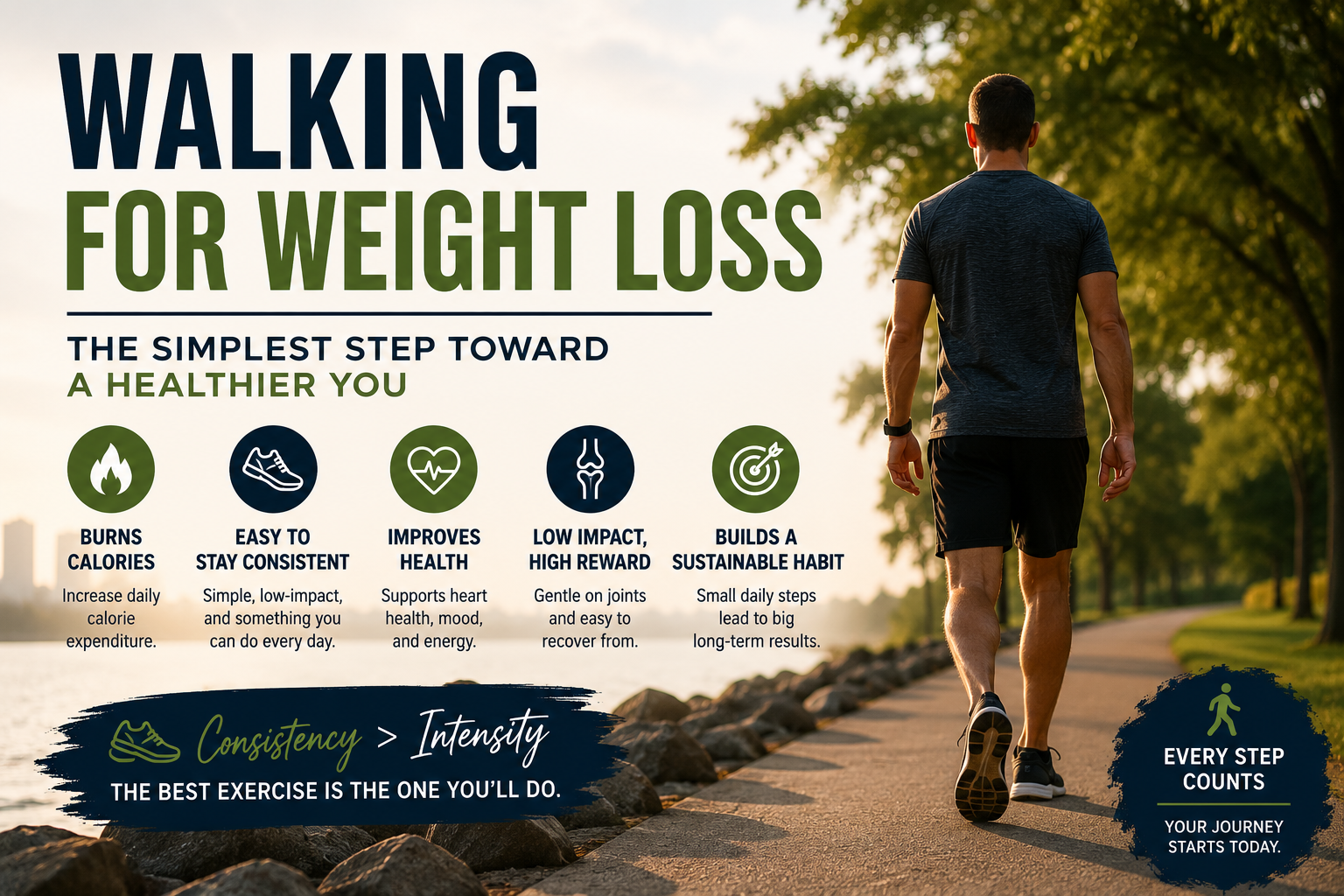
Walking for Weight Loss: Why It's One of the Most Underrated Forms of Exercise
When most people decide they want to lose weight, they immediately think they need to start running.
Or doing HIIT workouts.
Or spending hours sweating on the treadmill.
Social media has convinced many people that if you're not exhausted by the end of your workout, you didn't accomplish anything.
But what if one of the best tools for losing weight was something you've been doing your entire life?
Walking.
At Get Up & Start, walking isn't an afterthought—it's one of the cornerstones of our coaching philosophy.
Why Walking Works So Well
Walking burns calories just like any other form of movement.
The difference isn't that it's "better" than every other exercise.
The difference is that it's easy to recover from, easy to stay consistent with, and realistic for almost everyone.
You don't need expensive equipment.
You don't need a gym membership.
You don't need to be in great shape before you start.
You simply need a comfortable pair of shoes and a willingness to begin.
For someone who hasn't exercised in years, that's incredibly powerful.
Consistency Beats Intensity
One of the biggest mistakes people make is trying to do too much too soon.
They go from barely moving to trying to exercise six days a week.
They burn out.
Their body hurts.
Life gets busy.
The routine falls apart.
Walking avoids that trap.
Because it's something most people can realistically do every day.
A thirty-minute walk that you complete five days every week will almost always outperform an intense workout plan you quit after two weeks.
Progress comes from what you can sustain—not what you can survive.
Walking Helps Create a Predictable Routine
One reason we encourage clients to walk consistently is that it creates a reliable baseline of daily movement.
If you know you're getting a similar amount of activity most days, it's much easier to estimate how many calories your body burns and make appropriate nutrition decisions.
Some days you might exercise more.
Some days less.
But maintaining a regular walking habit gives you a foundation you can build on.
It's one of the simplest ways to add structure to your weight-loss journey without making life feel overwhelming.
Walking Is Easier to Recover From
Recovery is often overlooked.
If you're constantly sore and exhausted, you're less likely to stay active.
Walking places relatively little stress on your joints and muscles compared to high-impact activities like running or jumping.
That means you can usually recover quickly and continue moving the next day.
For beginners, people carrying extra weight, or anyone returning after a long break, this can make an enormous difference in long-term consistency.
Walking and Hunger
Many people notice that long, intense cardio sessions leave them feeling extremely hungry afterward.
While everyone's body responds differently, walking is often easier to recover from and may feel more manageable for people trying to maintain a calorie deficit.
If a form of exercise consistently leaves you so hungry that it's difficult to stick to your nutrition plan, it may not be the best primary tool for your weight-loss journey.
Walking provides a balance between increasing activity and remaining sustainable.
Walking vs. Running
People are often surprised to learn that walking and running the same distance can burn a similar number of calories.
The biggest difference is usually time, not necessarily total energy expenditure.
Running allows you to cover the distance faster.
Walking takes longer but is generally easier to recover from and places less stress on the body.
That doesn't make one universally better than the other.
If you enjoy running, keep running.
If walking allows you to stay consistent for months or years, that's an incredible advantage.
The best exercise is the one you'll continue doing.
Walking Isn't "Lazy Cardio"
Some people dismiss walking because it doesn't leave them drenched in sweat.
But effective weight loss isn't about looking exhausted.
It's about creating habits you can maintain.
Walking may not be flashy.
It probably won't go viral on social media.
But thousands of extra steps each day, repeated over months and years, can have a tremendous impact on your health.
Sometimes the simplest solutions really are the most effective.
Pair Walking With Strength Training
While walking is an incredible tool for increasing daily activity, we also encourage strength training whenever possible.
Walking helps increase your daily calorie expenditure.
Strength training helps preserve muscle while you're losing fat.
Together, they create a sustainable approach that improves both your health and body composition.
You don't need to choose one or the other.
They work exceptionally well together.
Final Thoughts
You don't need to punish yourself to lose weight.
You don't need to spend hours doing cardio every day.
You don't need to feel miserable to make progress.
What you need is a routine you can follow consistently.
Walking is one of the simplest, safest, and most sustainable ways to build that routine.
It won't solve everything on its own.
But it might be the habit that makes every other healthy choice easier.
And sometimes, that's exactly where lasting change begins.
Ready to Take the First Step?
If you're tired of starting over and want a realistic plan built around your lifestyle, we'd love to help.
Book a free consultation today, and we'll show you how walking, nutrition, strength training, and sustainable habits can work together to help you take your life back.
SEO